
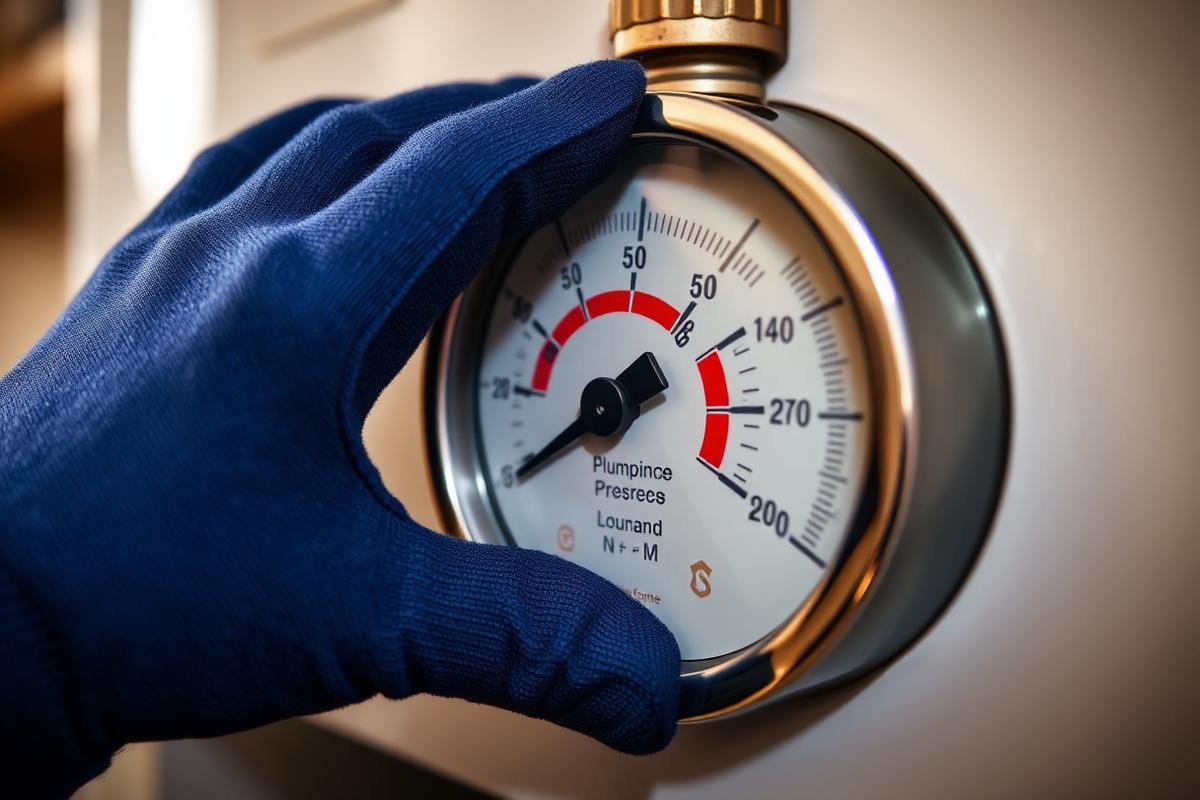
A dropping pressure gauge is the most common call we get. Here are the five causes, in the order we check them.
A sealed heating system should hold roughly 1.0 to 1.5 bar when cold. If you are topping up every few weeks, water is escaping somewhere, sealed systems do not consume water.
1. A leak on the pipework
Usually a compression joint under floorboards, a radiator valve gland, or a pinhole in a buried pipe. Look for tide marks on radiator valves and damp patches on ceilings below.
2. A failed expansion vessel
The vessel absorbs expansion as water heats. When its internal diaphragm fails or it loses its air charge, pressure spikes when hot and drops below zero when cold. Recharging or replacing the vessel is a straightforward job for a Gas Safe engineer.
3. A weeping pressure relief valve
If pressure climbs too high the PRV discharges outside through a small copper pipe. Damp under that pipe on the external wall is the giveaway. Often it is the vessel that is the real culprit.
4. An auto air vent stuck open
The small brass vent on the boiler can pass water once corroded. Cheap part, quick fix.
5. Recently bled radiators
Bleeding releases air, which lowers pressure. If you have just bled radiators, one top-up is normal, repeated top-ups are not.
When to call us
If you are re-pressurising more than once a month, get it looked at. Constant fresh water introduces oxygen, which accelerates corrosion and sludge, the leading cause of premature heat exchanger failure.